Garage Rock: The Raw Sound of the Basement
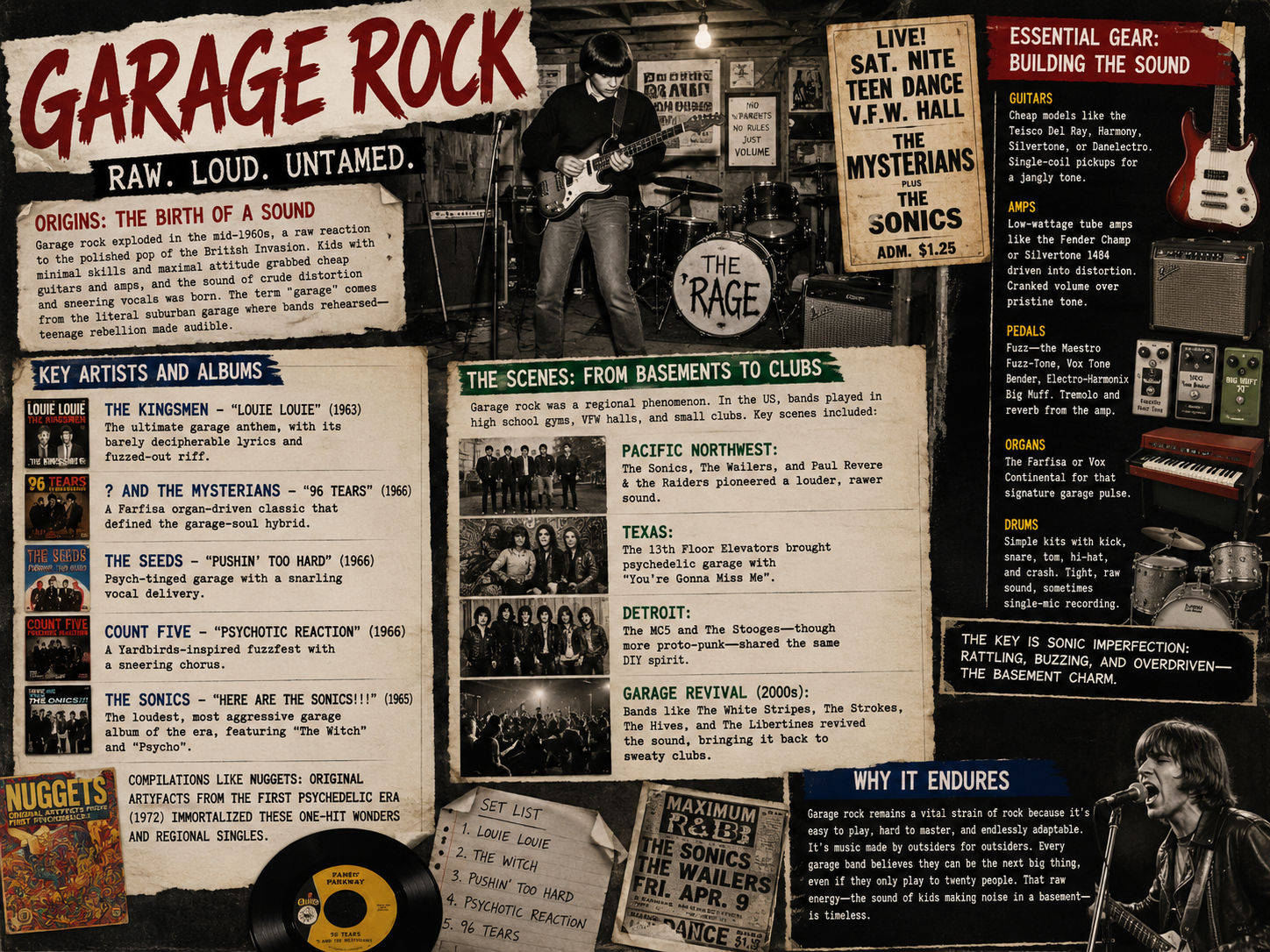
Origins: The Birth of a Sound
Garage rock exploded in the mid-1960s, a raw reaction to the polished pop of the British Invasion. Kids with minimal skills and maximal attitude grabbed cheap guitars and amps, and the sound of crude distortion and sneering vocals was born. The term 'garage' comes from the literal suburban garage where bands rehearsed—teenage rebellion made audible.
Key Artists and Albums
- The Kingsmen – 'Louie Louie' (1963): The ultimate garage anthem, with its barely decipherable lyrics and fuzzed-out riff.
- ? and the Mysterians – '96 Tears' (1966): A Farfisa organ-driven classic that defined the garage-soul hybrid.
- The Seeds – 'Pushin' Too Hard' (1966): Psych-tinged garage with a snarling vocal delivery.
- Count Five – 'Psychotic Reaction' (1966): A Yardbirds-inspired fuzzfest with a sneering chorus.
- The Sonics – 'Here Are the Sonics!!!' (1965): The loudest, most aggressive garage album of the era, featuring 'The Witch' and 'Psycho'.
Compilations like Nuggets: Original Artyfacts from the First Psychedelic Era (1972) immortalized these one-hit wonders and regional singles.
The Scenes: From Basements to Clubs
Garage rock was a regional phenomenon. In the US, bands played in high school gyms, VFW halls, and small clubs. Key scenes included:
- Pacific Northwest: The Sonics, The Wailers, and Paul Revere & the Raiders pioneered a louder, rawer sound.
- Texas: The 13th Floor Elevators brought psychedelic garage with 'You're Gonna Miss Me'.
- Detroit: The MC5 and The Stooges—though more proto-punk—shared the same DIY spirit.
- Garage Revival (2000s): Bands like The White Stripes, The Strokes, The Hives, and The Libertines revived the sound, bringing it back to sweaty clubs.
Essential Gear: Building the Sound
The garage rock sound is as much about limitations as creativity. Classic gear:
- Guitars: Cheap models like the Teisco Del Ray, Harmony, Silvertone, or Danelectro. Single-coil pickups for a jangly tone.
- Amps: Low-wattage tube amps like the Fender Champ or Silvertone 1484 driven into distortion. Cranked volume over pristine tone.
- Pedals: Fuzz—the Maestro Fuzz-Tone, Vox Tone Bender, Electro-Harmonix Big Muff. Tremolo and reverb from the amp.
- Organs: The Farfisa or Vox Continental for that signature garage pulse.
- Drums: Simple kits with kick, snare, tom, hi-hat, and crash. Tight, raw sound, sometimes single-mic recording.
Modern revivalists often use vintage gear or reissue models like the Danelectro '56 or Boss FZ-5 fuzz. The key is sonic imperfection: rattling, buzzing, and overdriven— the basement charm.
Why It Endures
Garage rock remains a vital strain of rock because it's easy to play, hard to master, and endlessly adaptable. It's music made by outsiders for outsiders. Every garage band believes they can be the next big thing, even if they only play to twenty people. That raw energy—the sound of kids making noise in a basement—is timeless.